Search by title, author, keyword, DOI, or abstract.
Paper 1
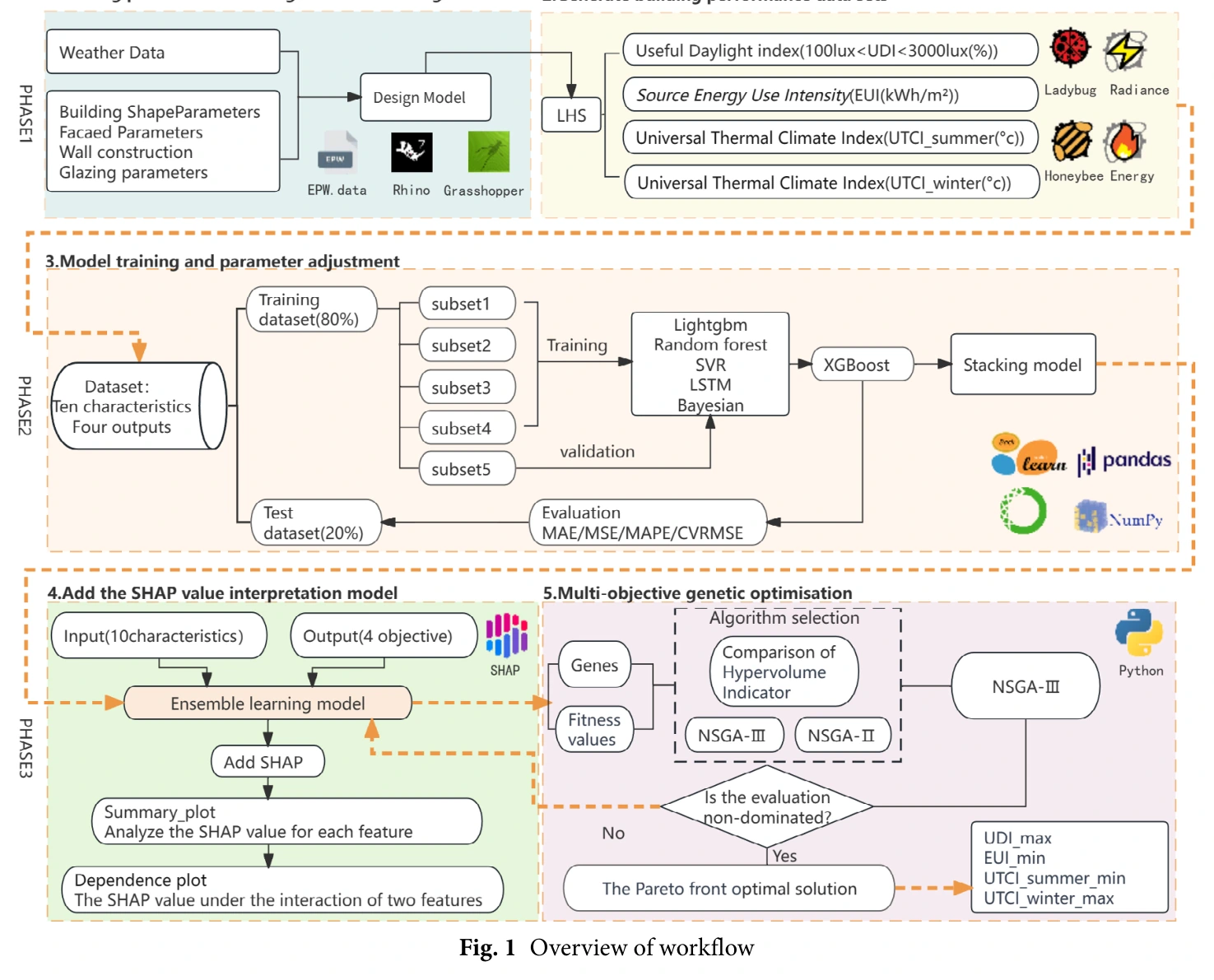
Utilizing interpretable stacking ensemble learning and NSGA-III for the prediction and optimisation of building photo-thermal environment and energy consumption
Shen et al. · Building Simulation, 2024 · DOI
building ecological performanceensemble learningmulti-objective optimisationsustainable design
Paper 1, entitled Utilizing interpretable stacking ensemble learning and NSGA-III for the prediction and optimisation of building photo-thermal environment and energy consumption, focused on the prediction and optimisation of building photo-thermal environment and energy consumption.
Read abstract
This study develops an approach consisting of a stacking model integrated with a multi-objective optimisation algorithm aimed at predicting and optimising the ecological performance of buildings. The integrated model consists of five base models and a meta-model, which significantly improves the prediction performance. Specifically, the R2 value was improved by 9.19% and the error metrics MAE, MSE, MAPE, and CVRMSE were reduced by 69.47%, 79.88%, 67.32%, and 57.02%, respectively, compared to the single prediction model. According to the research on interpretable machine learning, adding the SHAP value gives us a deeper understanding of the impact of each architectural design parameter on the performance. In the multi-objective optimisation part, we used the NSGA-III algorithm to successfully improve the energy efficiency, daylight utilisation and thermal comfort of the building. Specifically, the optimal design solution reduces the energy use intensity by 31.6 kWh/m2, improves the useful daylight index by 39%, and modulated the thermal comfort index, resulting in a decrement of 0.69 degrees C for the summer season and an enhancement of 0.64 degrees C for the winter season, respectively. Overall, this study provides building designers and decision makers with a tool to make better design decisions at an early stage to achieve a better combination of energy efficiency, daylight utilisation and thermal comfort optimisation in an integrated manner, providing an important support for achieving sustainable building design.
Paper 2
TSILNet: A novel hybrid model for energy disaggregation based on two-stage improved TCN combined with IECA-LSTM
Zhu et al. · Building Simulation, 2024 · DOI
deep learningnon-intrusive load monitoring (NILM)energy disaggregationtemporal convolutional network (TCN)
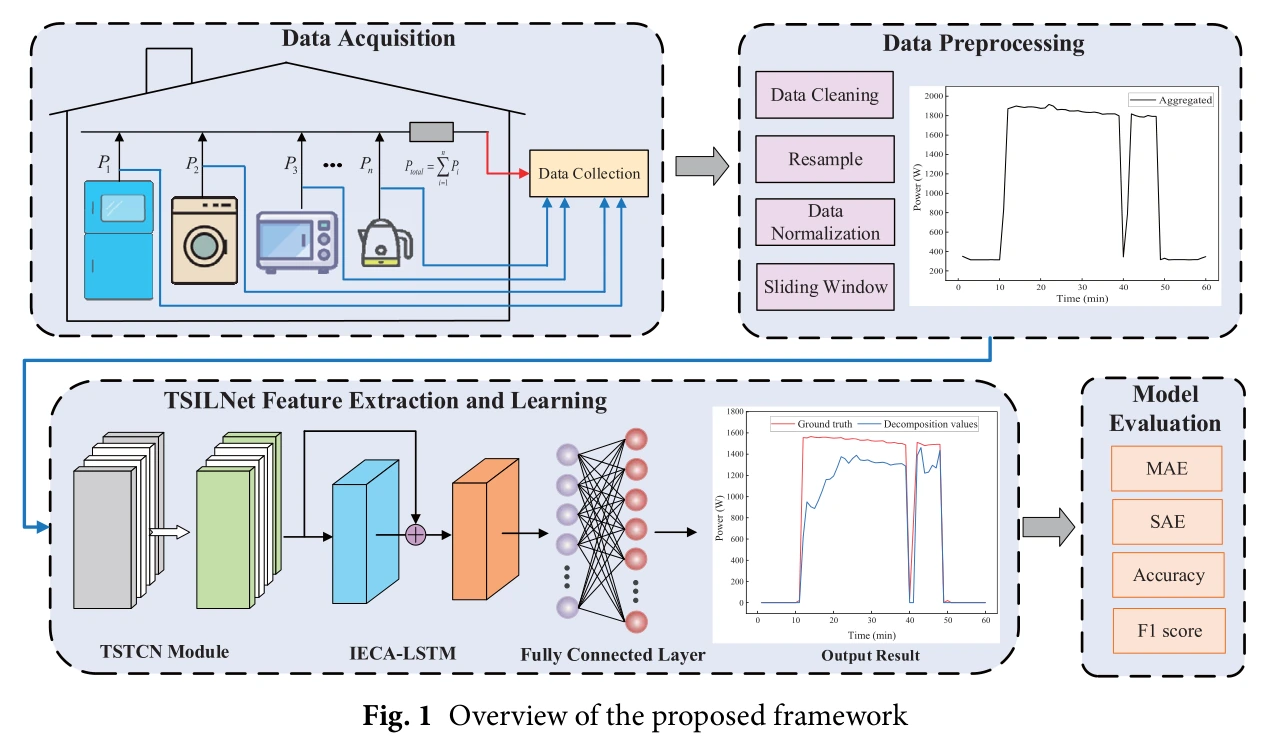
Paper 2, entitled TSILNet: A novel hybrid model for energy disaggregation based on two-stage improved TCN combined with IECA-LSTM, focused on energy disaggregation based on a hybrid deep learning model.
Read abstract
Non-intrusive load monitoring (NILM) technology aims to infer the operation information of electrical appliances from the total household load signals, which is of great significance for energy conservation and planning. However, existing methods are difficult to effectively capture the complex nonlinear features of the power consumption flow, which affects the energy disaggregation accuracy. To this end, this paper designs a method based on temporal convolutional network (TCN), efficient channel attention (ECA), and long short-term memory (LSTM). The method first creatively proposes a two-stage improved TCN (TSTCN), which overcomes its problems of extracting discontinuous information and poor correlation of long-distance information while enhancing the ability to extract high-level load features. Then a novel improved ECA attention mechanism (IECA) is embedded, which is also combined with the skip connection technique to pay channel-weighted attention to important feature maps and promote information fusion. Finally, the LSTM with strong temporal memory capability is introduced to learn the dependencies in the load power sequence and realize load disaggregation. Experiments on two real-world datasets, REDD and UK-DALE, show that the proposed model significantly outperforms other comparative NILM algorithms and achieves satisfactory tracking with the actual appliance operating power. The results show that the mean absolute error (MAE) of all appliances decreases by 18.67% on average, and the F1 score improves by 38.70%.
Paper 3
An unsupervised method of HVAC energy disaggregation and demand response potential estimation
Zhang et al. · Building Simulation, 2025 · DOI
demand responseload disaggregationunsupervisedenergy data
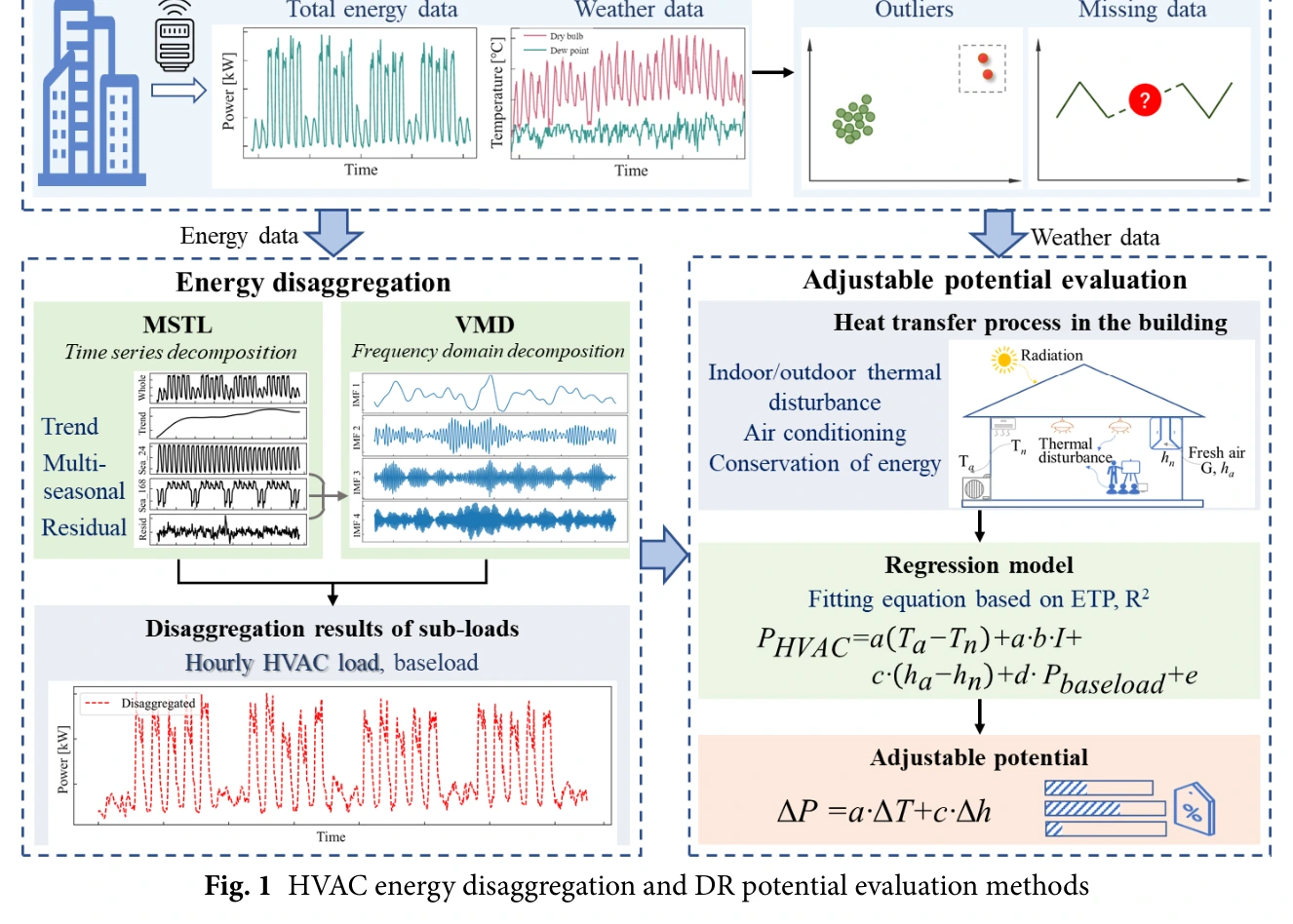
Paper 3, entitled An unsupervised method of HVAC energy disaggregation and demand response potential estimation, focused on HVAC energy disaggregation and demand response potential estimation.
Read abstract
The heating, ventilation, and air conditioning (HVAC) system is a promising flexibility resource for building energy management and grid stability. Quantitatively assessing HVAC demand response (DR) potential is crucial for integrating buildings into DR programs. However, utilities and load aggregators typically only have total building energy data, making HVAC energy disaggregation challenging. This study proposes an unsupervised and hybrid time-frequency domain decomposition method (MSTL-VMD) to disaggregate HVAC energy from total consumption and an improved equivalent thermal parameter model to quantify DR potential while considering outdoor weather, indoor environment, and occupant comfort. The effectiveness of the proposed method is verified based on historical data from 10 office buildings over 3 years. The results indicate that the HVAC energy can be accurately disaggregated using the MSTL-VMD method with NRMSE of 2.4%-12.6%. The proposed equivalent thermal parameter model can realize HVAC energy regression with an R2 value exceeding 0.8 for 80% of cases. A 1 degrees C indoor temperature increase results in energy savings of 7.3%-18.4% over the summer. The proposed method provides utilities and load aggregators with an effective and practical technique to quantify HVAC DR potential, enabling the development of optimal energy management strategies to enhance energy system resilience and efficiency.
Paper 4
Prediction of campus office occupancy and AC behavior based on Transformer and the collective impact on energy consumption
Yu et al. · Building Simulation, 2025 · DOI
air-conditioning on/off behaviorcontrol strategymulti-sensor fusionoccupancy
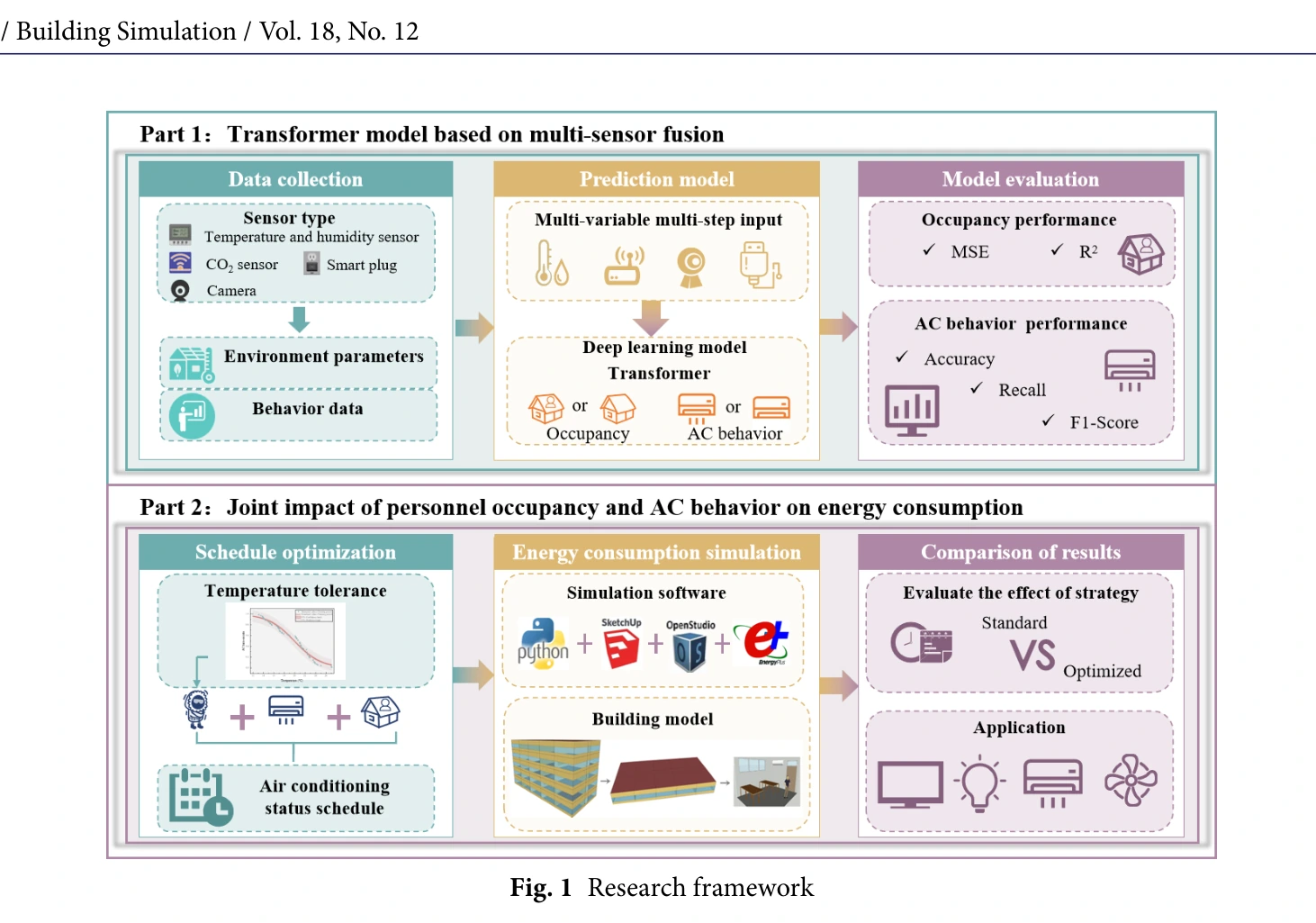
Paper 4, entitled Prediction of campus office occupancy and AC behavior based on Transformer and the collective impact on energy consumption, focused on the prediction of campus office occupancy and air-conditioning behavior and their collective impact on energy consumption.
Read abstract
Occupancy and air-conditioning on/off behavior have a significant impact on the operational energy consumption of a building, and it is important to study their joint role in implementing occupant centered control strategies and reducing building energy consumption. We propose a control strategy based on the synergistic analysis of occupancy and air-conditioning on/off behavior, incorporating tolerance temperature parameters to achieve fine-grained energy-saving regulation of air-conditioning in campus offices. Transformer is selected to handle the complex temporal patterns inherent in occupancy and air conditioning on/off behavioral data due to its expertise in capturing long-range dependencies and multi-feature interactions in temporal data. A Transformer-based multi-feature multi-step input prediction model is constructed by deploying a variety of sensors to collect environmental and behavioral data during a month-long experimental test in two offices within a university in Wuhan. The model is able to predict personnel occupancy (R2 = 0.917) and air-conditioning on/off behavior (Accuracy = 0.988) with relatively high accuracy. The energy simulation results show that the strategy can save up to 62% energy compared to the conventional system operation mode. A comparison of the results of the two office reveals that rooms with greater randomness of occupancy have a greater potential for energy savings. This study can provide an innovative and practical control strategy for reducing air-conditioning energy consumption in campus offices, which can help to achieve efficient energy utilization.
Paper 5
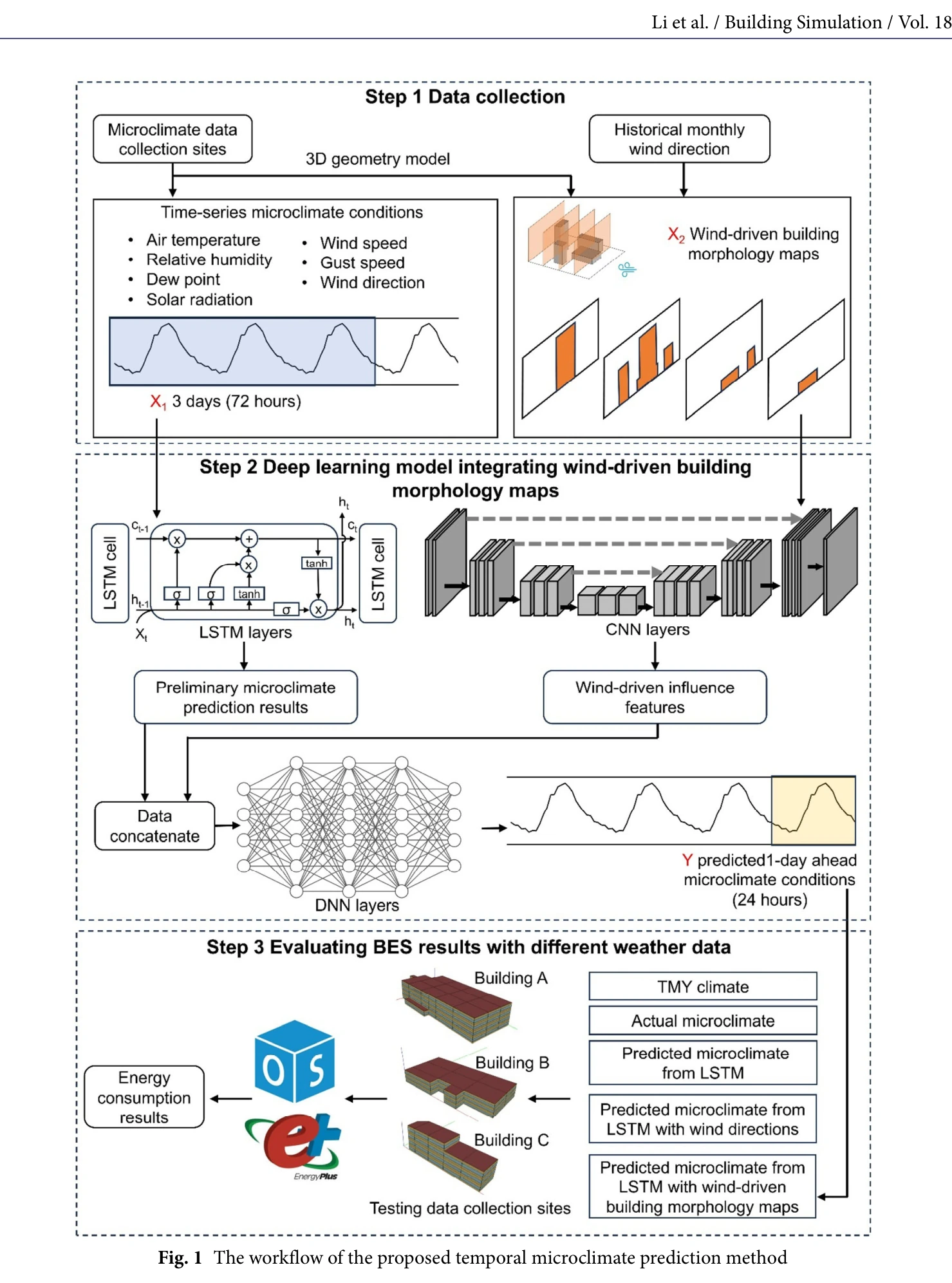
Impact of seasonal wind and building morphology on microclimate and building energy consumption
Li et al. · Building Simulation, 2025 · DOI
seasonal wind effecturban microclimatebuilding morphologydeep learning
Paper 5, entitled Impact of seasonal wind and building morphology on microclimate and building energy consumption, focused on the impact of seasonal wind and building morphology on microclimate and building energy consumption.
Read abstract
Accurate building energy simulation (BES) is essential for developing effective energy conservation strategies and implementing evidence-based policy interventions in the built environment. However, BES accuracy is often undermined by unrealistic weather data, as conventional Typical Meteorological Year (TMY) files fail to adequately capture urban microclimate variations. This study proposes a deep learning model that integrates wind-driven building morphology maps for high-resolution temporal microclimate prediction. By combining macro-scale wind dynamics with urban morphological features, encoded as frontal area maps, the model captures seasonal microclimate variations influenced by prevailing wind conditions. Validation conducted on a university campus demonstrates that the proposed model outperforms benchmark approaches in predicting air temperature and relative humidity (RH). The ground truth for validation is the real-time microclimate data collected by weather stations installed across the campus. Compared to TMY files, a standard deep learning model, and a deep learning model with wind directions, the proposed model reduces the root mean squared error (RMSE) in air temperature by 36.3%, 14.2%, and 14.0%, and RMSE in RH by 30.5%, 17.3%, and 17.3%, respectively. When integrated into BES for three test buildings, the model's weather data enabled cooling energy prediction with less than 2% error, significantly outperforming alternative methods. Overall, the proposed model allows cross-building temporal microclimate prediction without requiring long-term weather data collection at the target building.
Paper 6
A collaborative mixture of experts framework for building energy consumption prediction
Tan et al. · Building Simulation, 2025 · DOI
energy consumption predictionmixture-of-expertsdeep learningexpert label propagation
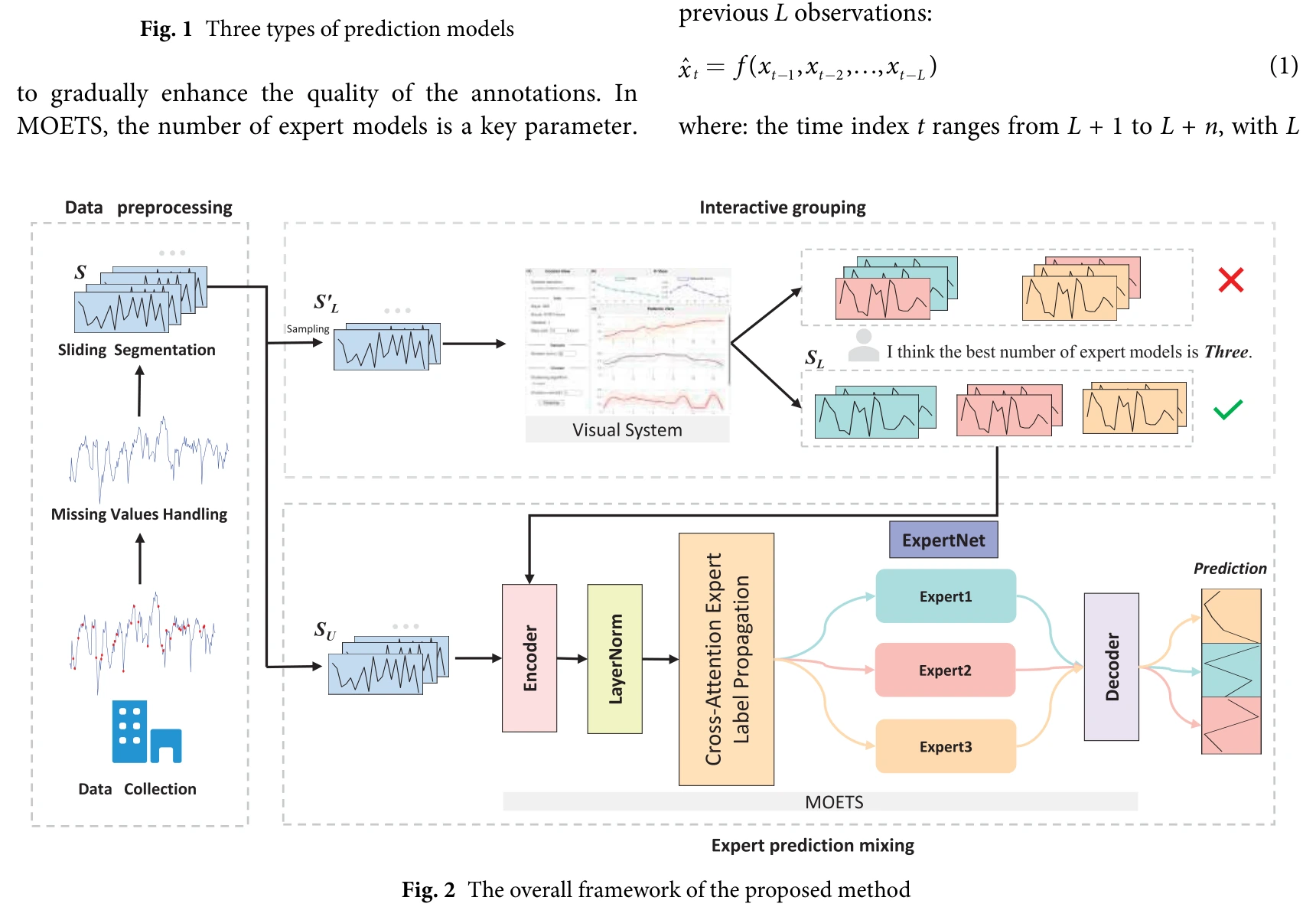
Paper 6, entitled A collaborative mixture of experts framework for building energy consumption prediction, focused on building energy consumption prediction using a collaborative mixture-of-experts framework.
Read abstract
Accurate prediction of energy consumption is crucial in the field of building energy efficiency, where artificial intelligence plays a significant role. However, existing methods still face considerable challenges in predicting complex energy consumption. Traditional models primarily aim to optimize overall objectives but often overlook local characteristics in the data, which places higher demands on the learning and generalization capabilities of predictive models. This paper introduces the Mixture of Experts for Time Series Prediction (MOETS) framework, which is a multi-expert collaborative forecasting framework designed to address the limitations of traditional models in forecasting diverse building energy consumption patterns. MOETS employs a cross-attention expert label propagation mechanism to dynamically select and activate the most suitable expert model from ExpertNet for prediction based on series characteristics, thereby achieving high prediction accuracy while maintaining exceptional computational efficiency. To optimize the number of expert models in ExpertNet, which directly impacts prediction accuracy, we developed an auxiliary visual system. This tool enables users to determine the optimal number of expert models, incorporate domain knowledge, and annotate subsets of data with expert series labels, thereby enhancing the accuracy of MOETS and reducing the time required for manual tuning. Additionally, users annotate subsets of data with expert series labels to guide the allocation of expert models within MOETS. We tested MOETS on seven datasets. The results show that compared to the baseline model, MOETS achieved a maximum reduction of 8.1% in RMSE and a maximum reduction of 6.2% in MAE. Additionally, the prediction speed was improved by 29.8%.
Paper 7
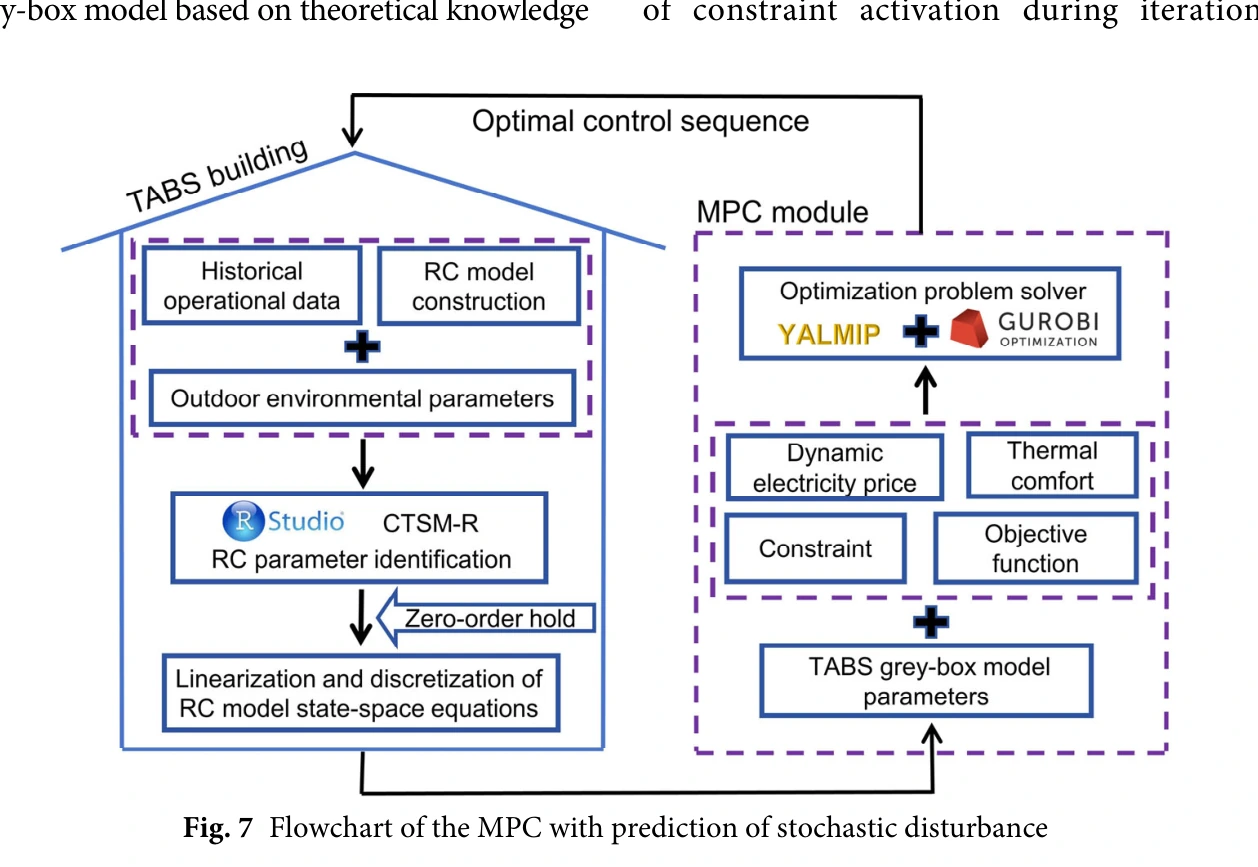
Hybrid physics-neural-network MPC with stochastic disturbance forecasting for high-inertia thermally activated building systems
Yang et al. · Building Simulation, 2025 · DOI
model predictive controlstochastic disturbance predictionthermally activated building systemsgrey-box model
Paper 7, entitled Hybrid physics-neural-network MPC with stochastic disturbance forecasting for high-inertia thermally activated building systems, focused on hybrid physics-neural-network model predictive control with stochastic disturbance forecasting for high-inertia thermally activated building systems.
Read abstract
Thermally activated building system (TABS) embeds heat exchanging tubes inside the building structure. The high thermal inertia possesses significant energy flexibility potential but also results in challenges for effective control, especially for the situations with unmeasurable stochastic thermal disturbances. This study presents an innovative hybrid model predictive control (MPC) framework that synergistically combines grey-box modeling with neural network-based disturbance prediction, specifically designed to overcome the control challenges of high-thermal-inertia TABS subject to unmeasurable stochastic disturbances. The framework is validated by experimental tests and supports both single and multiple disturbance scenarios. Concerning occupancy and outdoor solar global irradiance as the key stochastic disturbances, different control strategies including the rule-based control (RBC), conventional MPC without disturbance prediction, MPC with single disturbance prediction, MPC with multiple disturbances prediction, are established and systematically compared. Performance metrics including the temperature regulation accuracy, energy consumption, operation cost, and energy flexibility are quantitatively investigated. The results demonstrate that all MPC strategies outperform RBC. Compared to conventional MPC, the disturbance-prediction-coupled MPC reduces temperature constraint violations by 20%-42%, achieves 6% cost savings, and improves energy flexibility by 3.1%-8.6%. The multi-disturbanceprediction MPC shows optimal performance in temperature control, cost savings and energy flexibility enhancement. The proposed framework improves the accuracy of building load forecasting and the control performance of high thermal inertia systems, providing a pathway for optimizing building energy consumption and the coordinated operation efficiency of renewable energy in practical engineering applications.
Paper 8
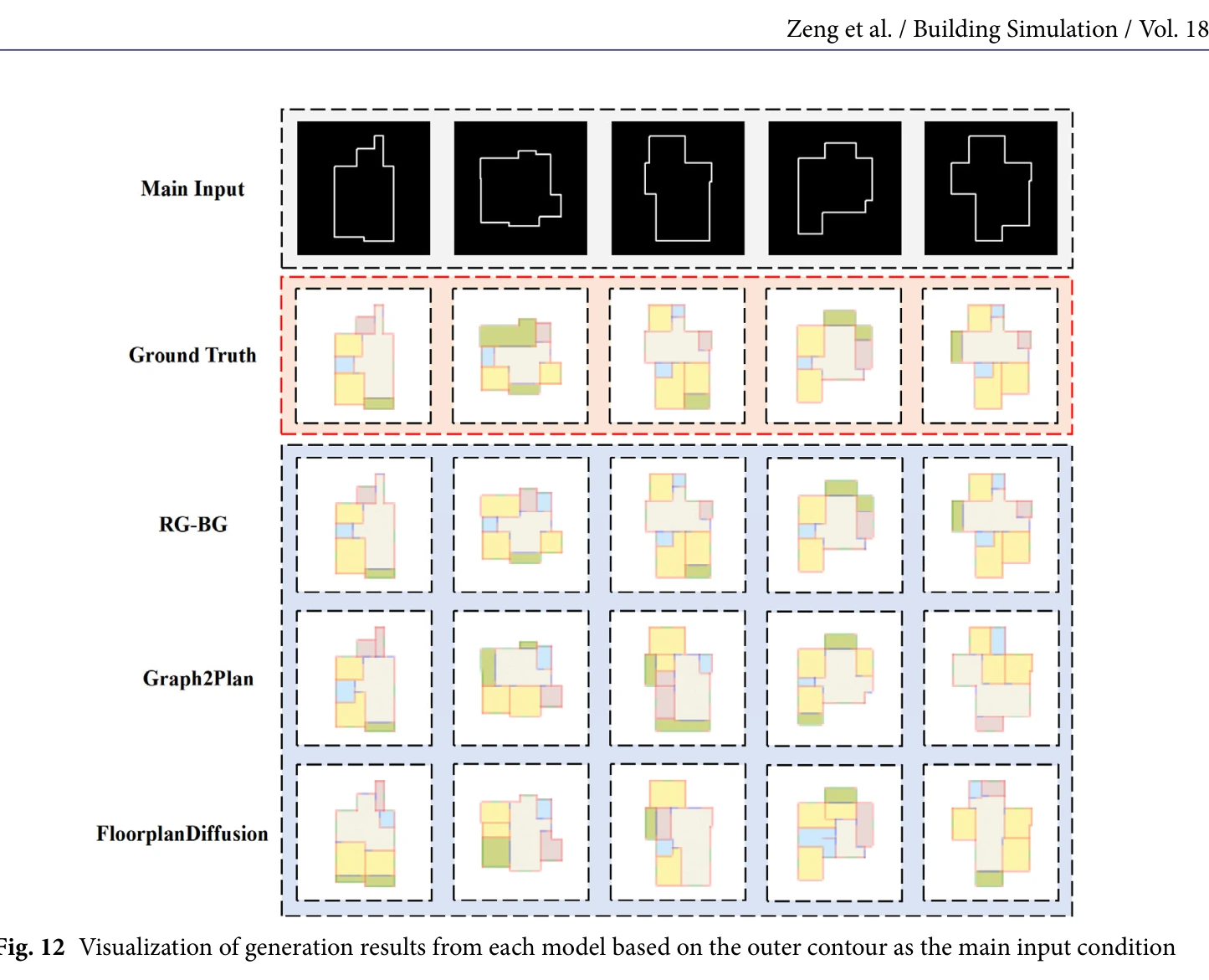
AI-based generation and optimization of energy-efficient residential layouts controlled by contour and room number
Zeng et al. · Building Simulation, 2025 · DOI
energy-efficient residential buildingsfloor plan generationenergy optimizationdiffusion model
Paper 8, entitled AI-based generation and optimization of energy-efficient residential layouts controlled by contour and room number, focused on AI-based generation and optimization of energy-efficient residential layouts.
Read abstract
Residential energy use accounts for a substantial portion of global consumption, making its reduction critical for sustainable architectural design. However, existing generative models for residential layouts often overlook energy performance, resulting in inefficient designs and costly revisions. To address this, we propose an AI-based framework that integrates generative model, energy prediction, and evolutionary optimization. Our framework comprises three components: (1) Energy prediction: a deep learning model trained on energy simulations of 71,125 floor plans from the RPLAN dataset predicts monthly energy consumption across five categories with over 99% accuracy. (2) Generative model: a diffusion-based layout generator uses room blocks and residential contours to create diverse, high-quality floor plans under spatial constraints. (3) Optimization: a genetic algorithm iteratively refines floor plans by selecting low-energy solutions and regenerating new options, guided by the predictive model. Experiments show that our method reduces energy consumption by 17.5% compared to the best baseline model under identical conditions, demonstrating its effectiveness in reducing residential energy use. Our key contributions include the use of room blocks as chromosomes for layout evolution, and the integration of AI-based prediction and generation for energy-aware residential design.
Paper 9
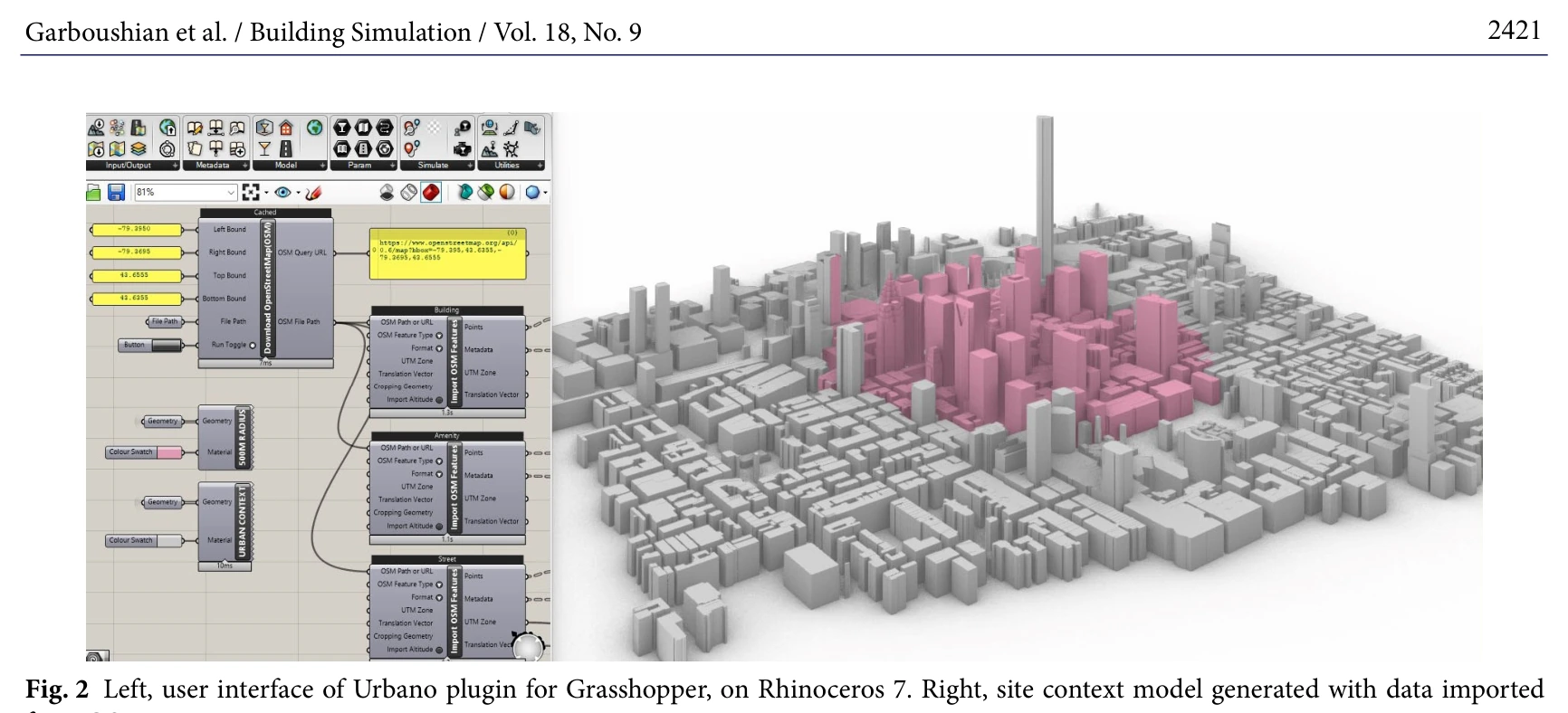
Adaptive reuse strategies in urban centers: Experimental validation using neural networks and real building data
Garboushian et al. · Building Simulation, 2025 · DOI
adaptive reuse modelingurban energy efficiencydaylighting simulationneural networks
Paper 9, entitled Adaptive reuse strategies in urban centers: Experimental validation using neural networks and real building data, focused on adaptive reuse strategies in urban centers using neural networks and real building data.
Read abstract
Adaptive reuse in urban centers aims to achieve net-zero energy goals by lowering energy consumption and improving thermal comfort in existing buildings. The combined effects of building expansions on energy performance, and daylighting availability remain unexplored. This paper developed a novel simulation model by applying multi-building data and neural-networks framework to examine the impact of adaptive reuse through variables including number of floors, energy generation, fa & ccedil;ade glazing, and building expansions in various directions. The developed model was validated by comparing simulated and actual energy use of several buildings, yielding an average error of 7.88%. This error represents the deviation between the simulated and actual energy use intensity values. Energy demand reduced by expansion along the East-West axis was 41% greater than that from expansion in the South direction. This was confirmed by sensitivity analysis, with R values of approximately 0.68 for East and West expansions, and 0.16 for the South. Overall, this study demonstrates that expanding buildings in the East-West direction tends to be the most energy-efficient approach for increasing occupied spaces, with its effectiveness potentially influenced by factors such as site location, building orientation, and climatic conditions.
Paper 10
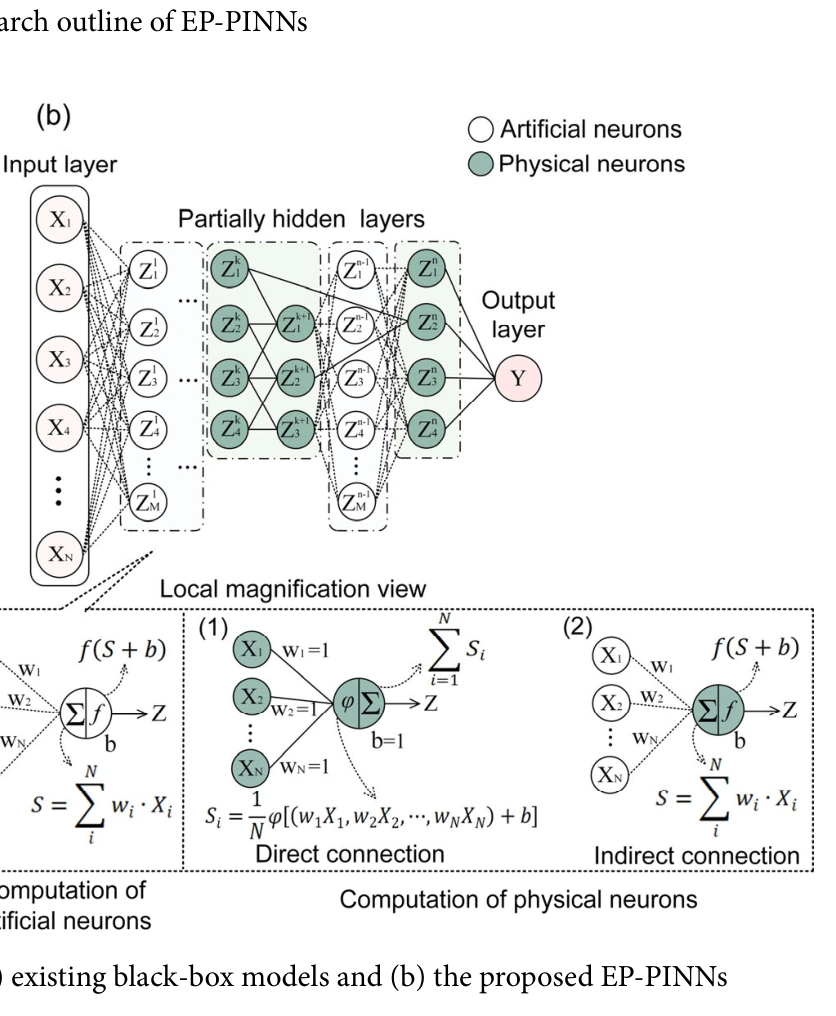
Embedding physical neurons in physics-informed neural networks (EP-PINNs) for enhancing chiller performance prediction
Fang et al. · Building Simulation, 2025 · DOI
chiller performance predictionphysics-informed neural networkneural network architecturegeneralization capability
Paper 10, entitled Embedding physical neurons in physics-informed neural networks (EP-PINNs) for enhancing chiller performance prediction, focused on enhancing chiller performance prediction by embedding physical neurons in physics-informed neural networks.
Read abstract
Accurate chiller performance prediction is crucial for improving the energy efficiency of heating, ventilation, and air conditioning (HVAC) systems. Data-driven models commonly used to enhance chiller performance often rely on sparse data collected under restricted conditions. These models must extrapolate beyond their training data in practical applications, but they generally lack the generalization capability needed for reliable predictions outside their training range. Additionally, their limited interpretability hampers understanding of the physical processes affecting chiller performance, complicating fault identification and performance optimization. To address these issues, this study embeds physical neurons in physics-informed neural networks (EP-PINNs) to enhance chiller performance prediction. By leveraging prior physical knowledge, physical neurons are introduced and embedded into the neural network, forming a neural network architecture with intrinsic physics-based information flow. Simultaneously, simplified physical loss terms are used to guide the training process. The proposed EP-PINNs were applied to predict the performance of four different chillers, and the results demonstrated their high prediction accuracy. Compared to data-driven models, the EP-PINNs exhibited significantly improved generalization capability and interpretability. These advantages highlight the practical value of EP-PINNs in HVAC equipment performance prediction.
Paper 11
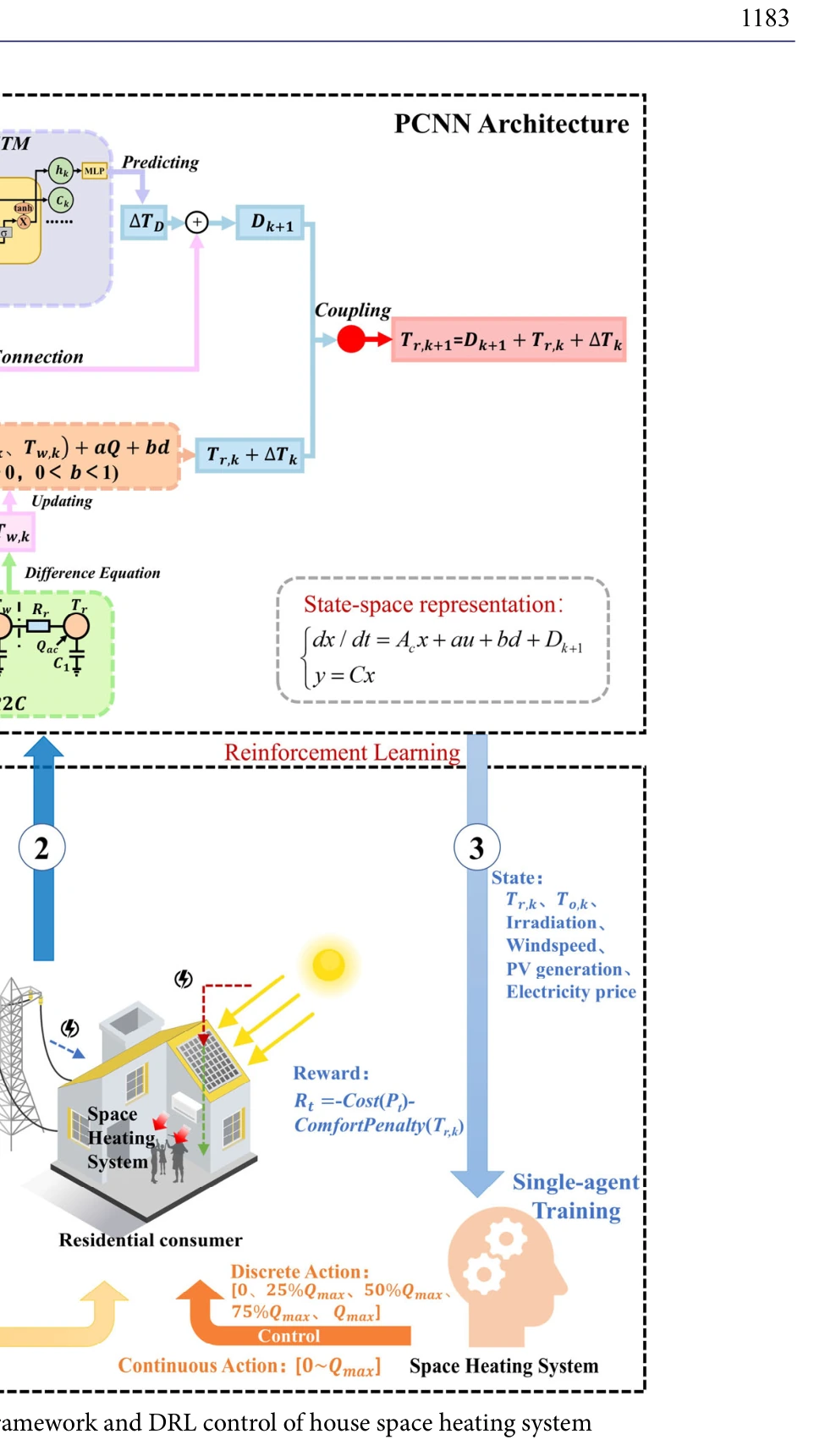
Performance evaluation of physical consistency approach for optimizing residential space heating system in cold snap conditions
Ran et al. · Building Simulation, 2025 · DOI
physical consistencythermal dynamic modelsdeep reinforcement learningenergy management performance
Paper 11, entitled Performance evaluation of physical consistency approach for optimizing residential space heating system in cold snap conditions, focused on the performance evaluation of a physical consistency approach for optimizing residential space heating systems under cold snap conditions.
Read abstract
Reliable and efficient modeling of residential space heating systems is crucial for optimizing building energy usage, especially during extreme cold snap events. Traditional white-box models require significant expertise and time-intensive parameterization, whereas simplified grey-box resistance-capacitance (RC) models often suffer from limited accuracy and frequent recalibrations. Although purely data-driven methods show promise in predictive performance, they lack scalability and interpretability. To address these limitations, the study proposes a physically consistent neural network (PCNN) that integrates fundamental heat transfer principles with data-driven learning. This study compares the performance of grey-box RC models, conventional data-driven models, and the proposed PCNN within a deep reinforcement learning (DRL) framework for space heating control. The evaluation focuses on each model's predictive accuracy under severe cold snap conditions, as well as their impact on indoor comfort, grid imports, and photovoltaic (PV) utilization. Results show that the PCNN achieves up to a 93.9% reduction in mean absolute error (MAE) prediction errors compared to the RC model and exhibits greater robustness to abrupt temperature drops. When incorporated into DRL controllers, the PCNN enhances indoor temperature stability, increases on-site PV consumption, and reduces energy dependence. Additionally, the PCNN can be effectively trained with smaller datasets without sacrificing accuracy. Although the PCNN model demonstrates higher computational overhead during DRL optimization, its moderate complexity is offset by its enhanced reliability. Notably, the PCNN outperforms all other models in continuous control scenarios, maintaining a mean indoor temperature of 21.9 degrees C with a minimal deviation of -0.1 degrees C, reaching a 69.2% PV consumption rate, lowering total grid imports by approximately 37%, and reducing overall energy costs by nearly 48% compared to measured results.
Paper 12
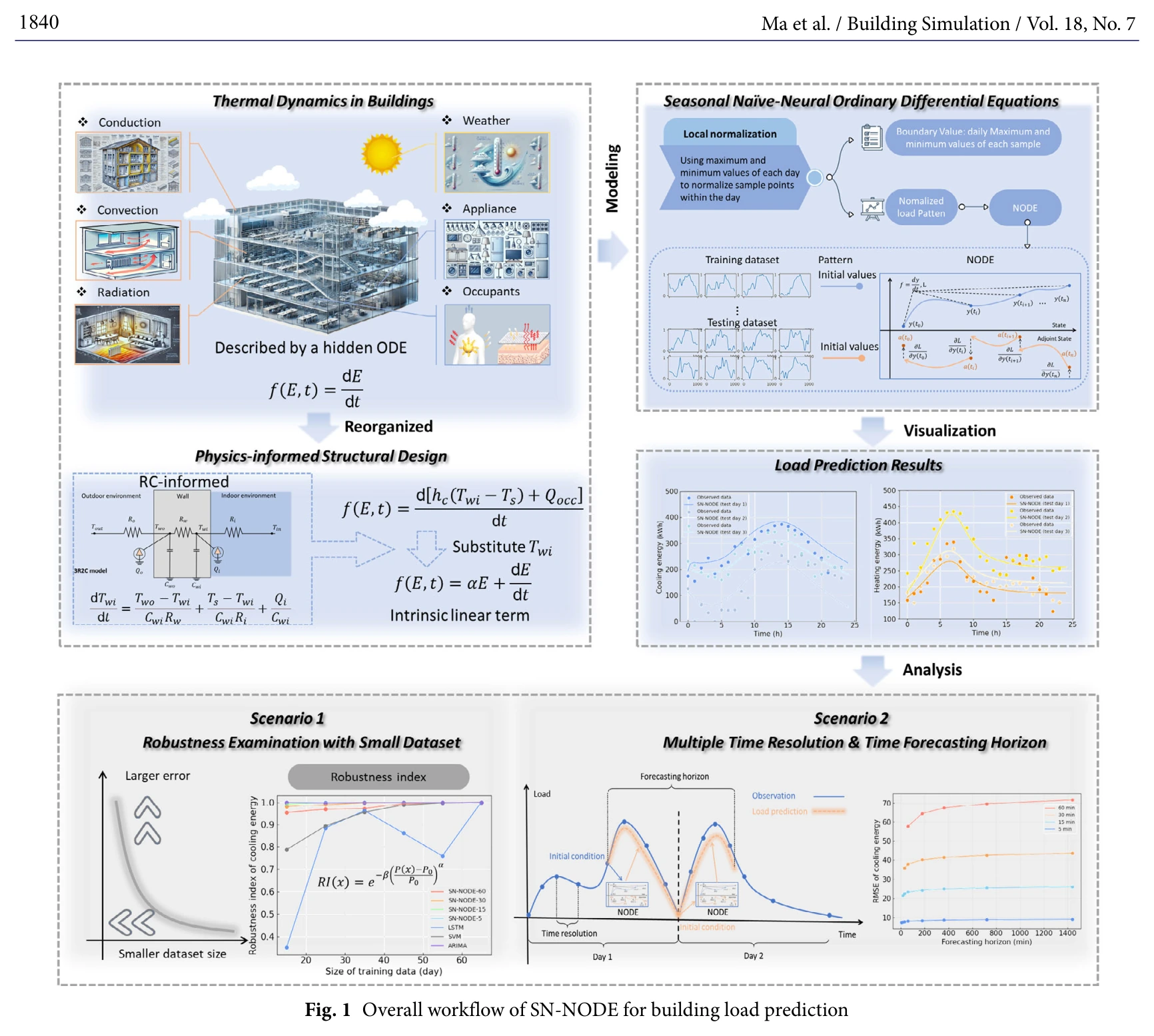
Neural ordinary differential equations-based approach for enhanced building energy modeling on small datasets
Ma et al. · Building Simulation, 2025 · DOI
neural ordinary differential equationsphysics-informed machine learningbuilding energy modelingsmall training datasets
Paper 12, entitled Neural ordinary differential equations-based approach for enhanced building energy modeling on small datasets, focused on enhanced building energy modeling on small datasets using neural ordinary differential equations.
Read abstract
The substantial progress in machine learning (ML) techniques and the growing availability of building data have created significant opportunities for rapid and precise building energy modeling. However, despite the notable capabilities of ML algorithms, their performance could severely degrade when available training dataset is limited, undermining trustworthiness and effectiveness of model application in practice. To address this challenge, this study develops the seasonal na & iuml;ve-neural-ordinary differential equations (SN-NODE) model to predict the cooling and heating loads of buildings, especially in scenarios with severe data scarcity. By incorporating a physics-informed structure into SN-NODE, the model aligns predictions with the underlying physical principle governed by resistance-capacitance (RC) models, enhancing both accuracy and reliability. The resulting predictions for hourly and sub-hourly cooling and heating loads achieved a coefficient of variation of root mean square error (CVRMSE) of approximately 0.3 and 0.2, respectively, demonstrating its strong potential for accurate building load prediction. The physics-informed structure further improved prediction accuracy over the original SN-NODE when trained with hourly dataset, ensuring physically consistent and interpretable results. Moreover, a robustness index (RI) function was proposed to evaluate the model robustness in a nonlinear manner, showcasing the superior performance of the SN-NODE model with limited training data compared to conventional data-driven models including long-short term memory (LSTM) and support vector machine (SVM). Notably, the SN-NODE model maintained high prediction accuracy even with only two weeks of training data, whereas the performance of LSTM decreased dramatically (CVRMSE increases from approximately 0.3 to 0.5) under similar conditions. Finally, the SN-NODE model exhibited robust performance across different time resolutions and forecasting horizons, achieving CVRMSE ranging from approximately 0.15 to 0.3 in building energy use prediction.
Paper 13
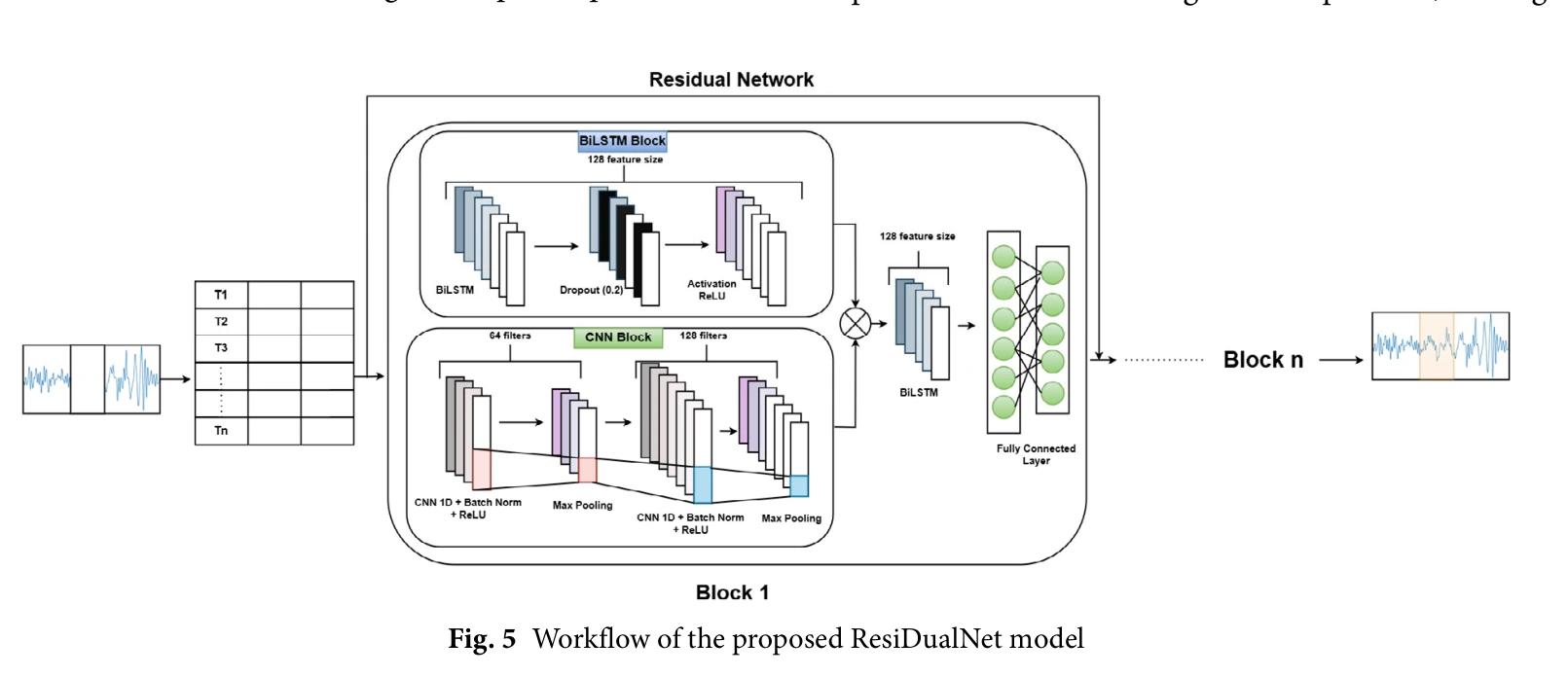
ResiDualNet: A novel electric vehicle charging data imputation technique to enhance load forecasting accuracy
Fahim et al. · Building Simulation, 2025 · DOI
electric vehicleload forecastingmissing data imputationresidual Seq2Seq
Paper 13, entitled ResiDualNet: A novel electric vehicle charging data imputation technique to enhance load forecasting accuracy, focused on electric vehicle charging data imputation for enhancing load forecasting accuracy.
Read abstract
Electric vehicles (EVs) are a sustainable mode of transportation, significantly reducing greenhouse gas emissions. The development of EV charging stations is crucial for supporting the growing number of EVs and integrating them into smart grid infrastructure. Efficient use of these stations requires optimized energy management and accurate forecasting of EV charging behaviors. However, forecasting accuracy is often hindered by missing data due to connectivity issues and equipment failures. To address these challenges, this study introduces a novel data imputation method ResiDualNet (Residual Dual BiLSTM-CNN Path Network), which is a residual sequence-to-sequence technique for imputing missing EV charging data. This model effectively captures underlying temporal and long-term dependencies, demonstrating strong performance across various scenarios. We compare our proposed model with two commonly used imputation methods KNN and Mean Imputation and one generative model, Generative Adversarial Network (GAN), across four different EV charging datasets. Experimental results demonstrate that our model significantly outperforms the others, showing an average improvement of 82% in terms of root mean squared error (RMSE) across all datasets. To further assess the effectiveness of our imputation model, we utilize three cutting-edge and newly introduced forecasting models: Bidirectional Long Short-Term Memory (BiLSTM), Mogrifier LSTM, and Sample Convolution and Interaction Network (SCINet) to predict EV charging load. The results indicate that SCINet outperforms the other forecasting techniques. Moreover, for SCINet, the dataset imputed by our proposed model performs second best after the real dataset, confirming the effectiveness of our imputation approach in improving forecasting accuracy for EV charging data. The complete source code is provided in the following repository: https://github.com/fffahim/ResiDualNet.git
Paper 14
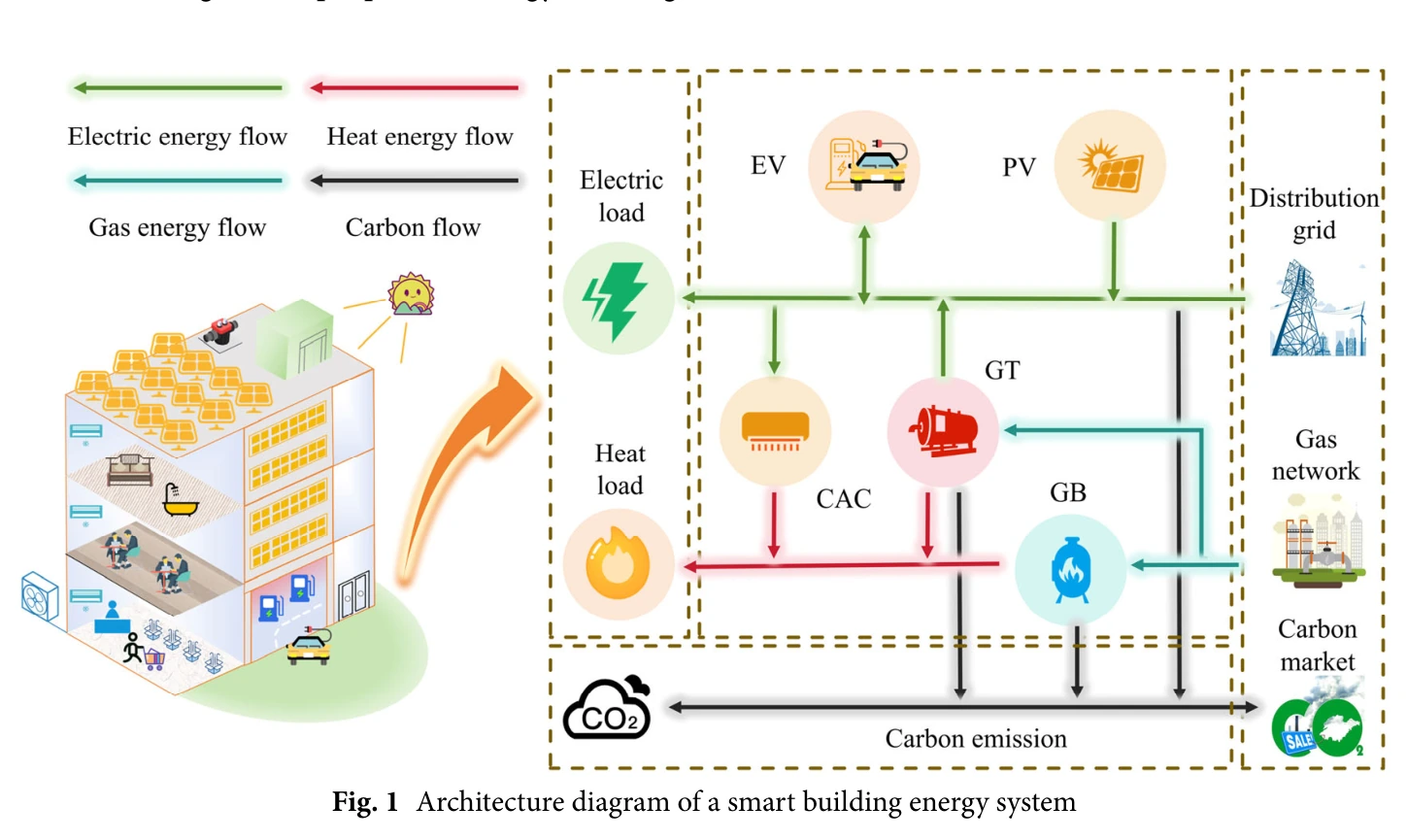
Day-ahead energy management of a smart building energy system aggregated with electrical vehicles based on distributionally robust optimization
Zhao et al. · Building Simulation, 2025 · DOI
building energy systemelectric vehiclescarbon tradingdistributionally robust optimization
Paper 14, entitled Day-ahead energy management of a smart building energy system aggregated with electrical vehicles based on distributionally robust optimization, focused on day-ahead energy management of a smart building energy system aggregated with electric vehicles based on distributionally robust optimization.
Read abstract
With the adjustment of the energy structure and the rapid development of commercial complex buildings, building energy systems (BES) are playing an increasingly important role. To fully utilize smart building management techniques for coordinating and optimizing energy systems while limiting carbon emissions, this study proposes a smart building energy scheduling method based on distributionally robust optimization (DRO). First, a framework for day-ahead market interaction between the distribution grid (DG), buildings, and electric vehicles (EVs) is established. Based on the the price elasticity matrix principle, demand side management (DSM) technology is used to model the price-based demand response (PBDR) of building electricity load. Meanwhile, the thermal inertia and thermal load flexibility of the building heating system are utilized to leverage the energy storage capabilities of the heating system. Second, a Wasserstein DRO Stackelberg game model is constructed with the objective of maximizing the benefits for both buildings and EVs. This Wasserstein distributionally robust model is then transformed into a mixed-integer model by combining the Karush-Kuhn-Tucker (KKT) conditions and duality theory. Finally, the optimization effect of temperature load storage characteristics on BES flexible scheduling and the coordination of DRO indicators on the optimization results were verified through simulations. The strategy proposed in this article can reduce the total operating cost of BES by 26.37%, significantly enhancing economic efficiency and achieving electricity and heat substitution, resulting in a smoother load curve. This study provides a theoretical foundation and assurance for optimal daily energy scheduling of BES.
Paper 15
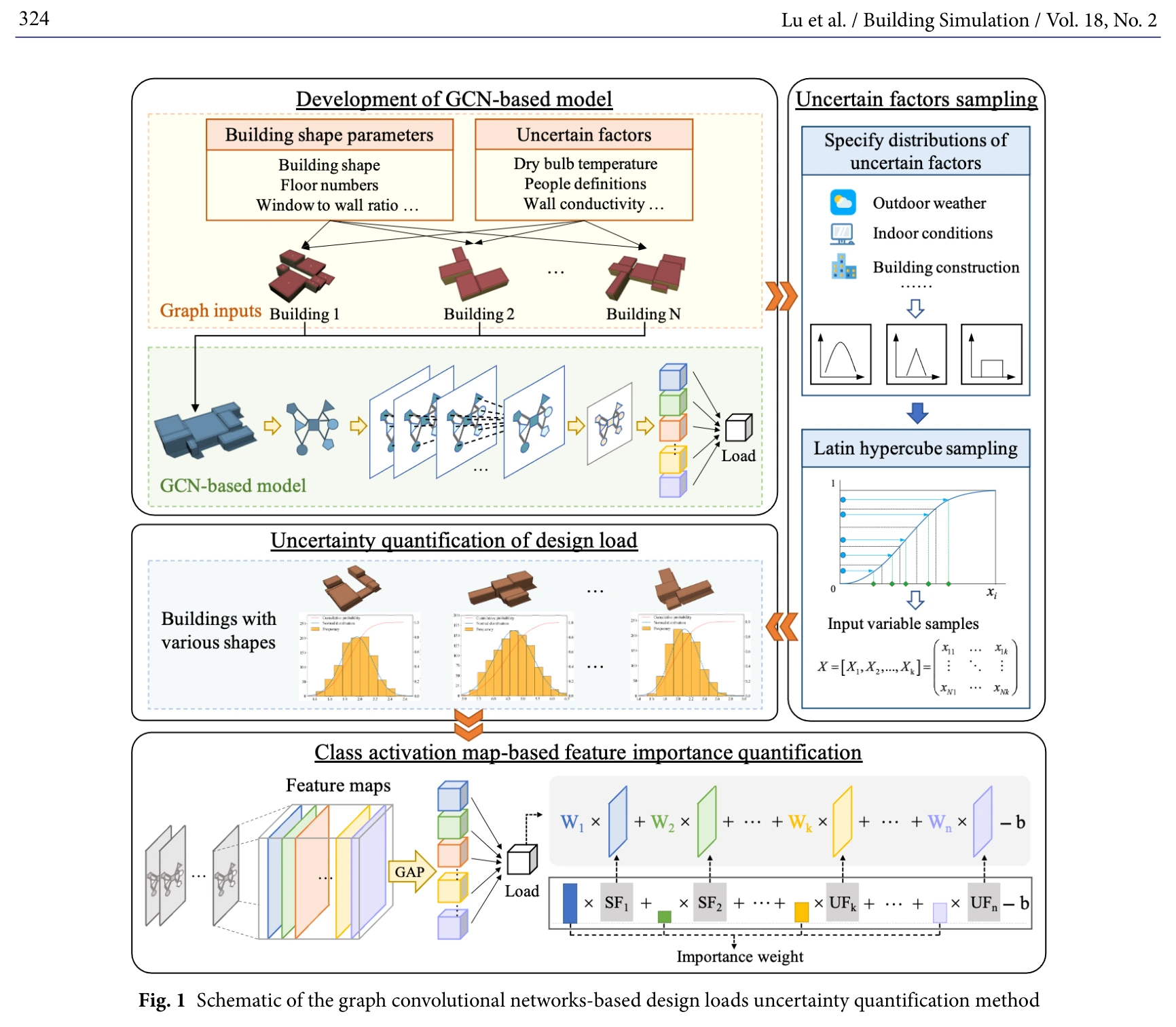
Graph convolutional networks-based method for uncertainty quantification of building design loads
Lu et al. · Building Simulation, 2025 · DOI
building design loadsuncertainty quantificationdata-driven modelgraph convolutional networks
Paper 15, entitled Graph convolutional networks-based method for uncertainty quantification of building design loads, focused on uncertainty quantification of building design loads using graph convolutional networks.
Read abstract
Uncertainty quantification of building design loads is essential to efficient and reliable building energy planning in the design stage. Current data-driven methods struggle to generalize across buildings with diverse shapes due to limitations in representing complex geometric structures. To tackle this issue, a graph convolutional networks (GCN)-based uncertainty quantification method is proposed. This graph-based approach is introduced to represent building shapes by dividing them into blocks and defining their spatial relationships through nodes and edges. The method effectively captures complex building characteristics, enhancing the generalization abilities. An approach leveraging GCN could estimate design loads by understanding the impact of diverse uncertain factors. Additionally, a class activation map is formulated to identify key uncertain factors, guiding the selection of important design parameters during the building design stage. The effectiveness of this method is evaluated through comparison with four widely-used data-driven techniques. Results indicate that the mean absolute percentage errors (MAPE) for statistical indicators of uncertainty quantification are under 6.0% and 4.0% for cooling loads and heating loads, respectively. The proposed method is demonstrated to quantify uncertainty in building design loads with outstanding generalization abilities. With regard to time costs, the computation time of the proposed method is reduced from 331 hours to 30 seconds for a twenty-floor building compared to a conventional physics-based method.