Impact of seasonal wind and building morphology on microclimate and building energy consumption
The paper shows how urban morphology and wind-aware microclimate prediction can improve building-energy inputs.
These studies move AI upstream into environmental input generation and design decision-making. They include wind- and morphology-aware microclimate prediction, diffusion-based energy-aware residential layout generation, and neural-network assessment of adaptive-reuse expansion strategies using real building data.
| Paper | Research problem | Method | Reported evidence |
|---|---|---|---|
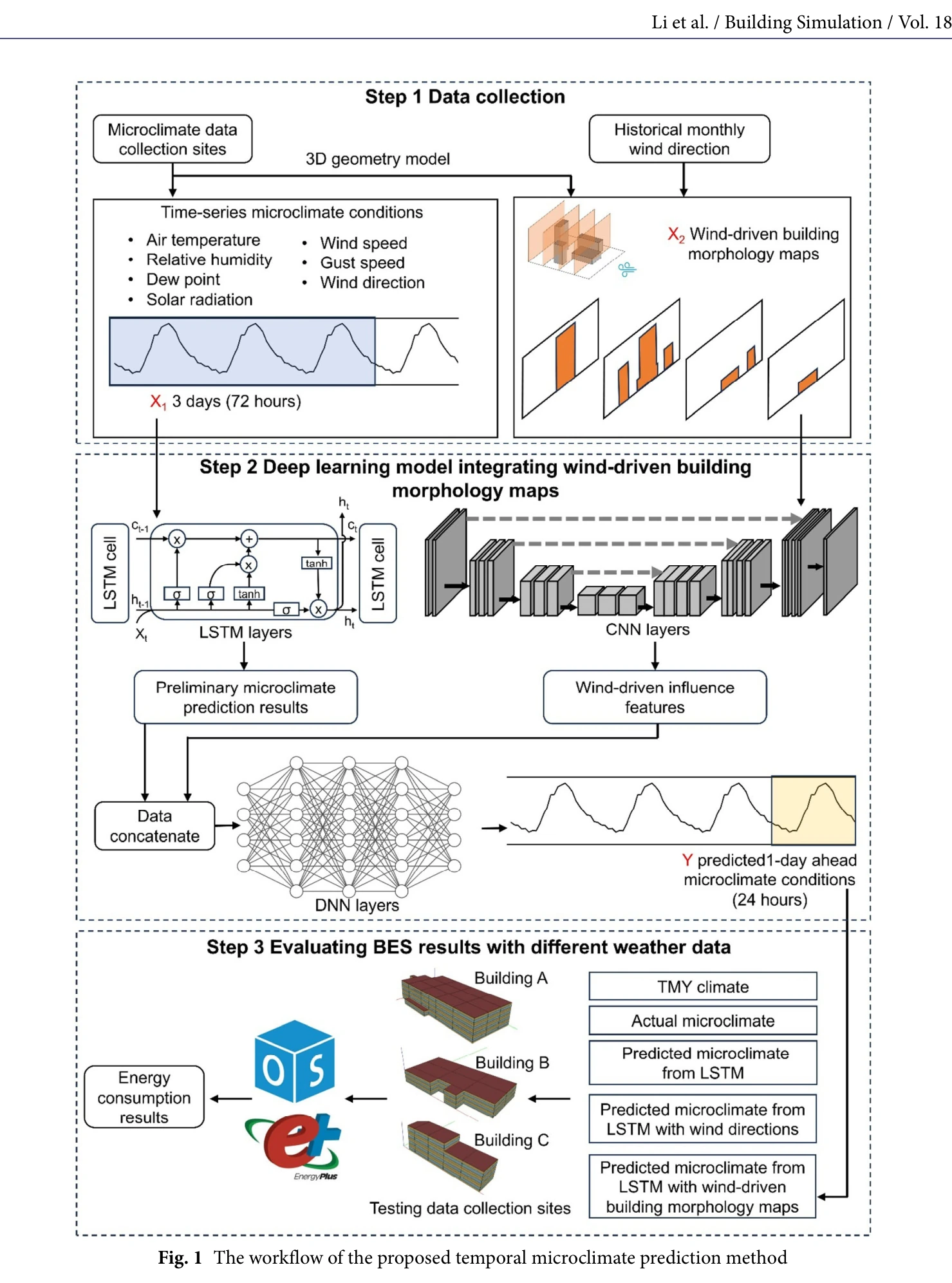
| Li et al. (2025) | Typical meteorological year files may not represent local urban microclimates well enough for accurate building energy simulation. | A deep-learning model integrates seasonal wind dynamics with building-morphology maps encoded through frontal-area information. | Campus validation reports lower temperature and humidity RMSE than TMY and benchmark models; when used in simulation for three buildings, cooling-energy prediction error is below 2%. |
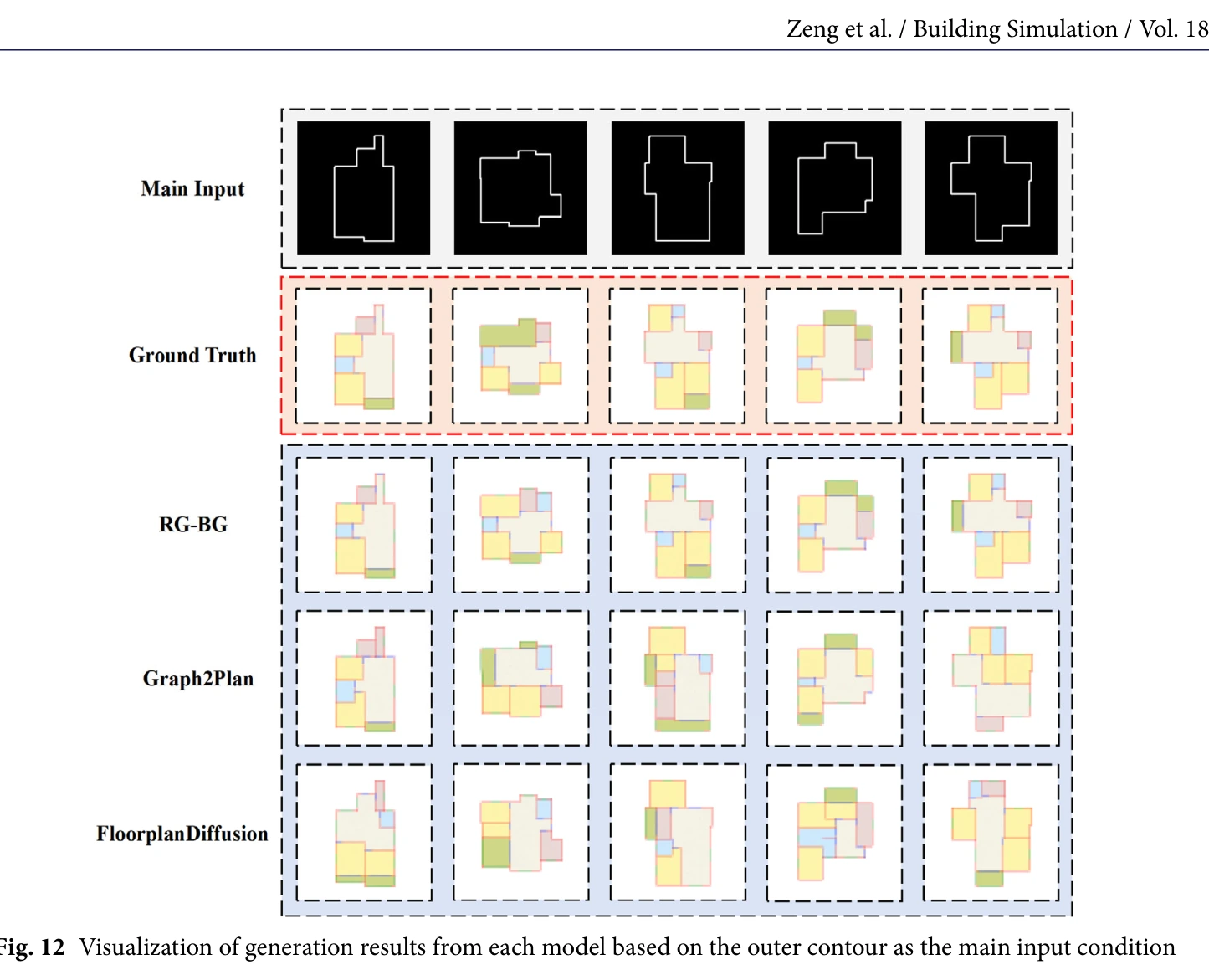
| Zeng et al. (2025) | Residential layout generators often satisfy spatial constraints without explicitly optimizing operational energy performance. | The framework combines a deep-learning energy predictor trained on 71,125 RPLAN layouts, a diffusion-based floor-plan generator, and genetic-algorithm refinement. | The predictor exceeds 99% accuracy for five monthly energy categories, and the optimized layouts reduce energy use by 17.5% relative to the best baseline under matched conditions. |
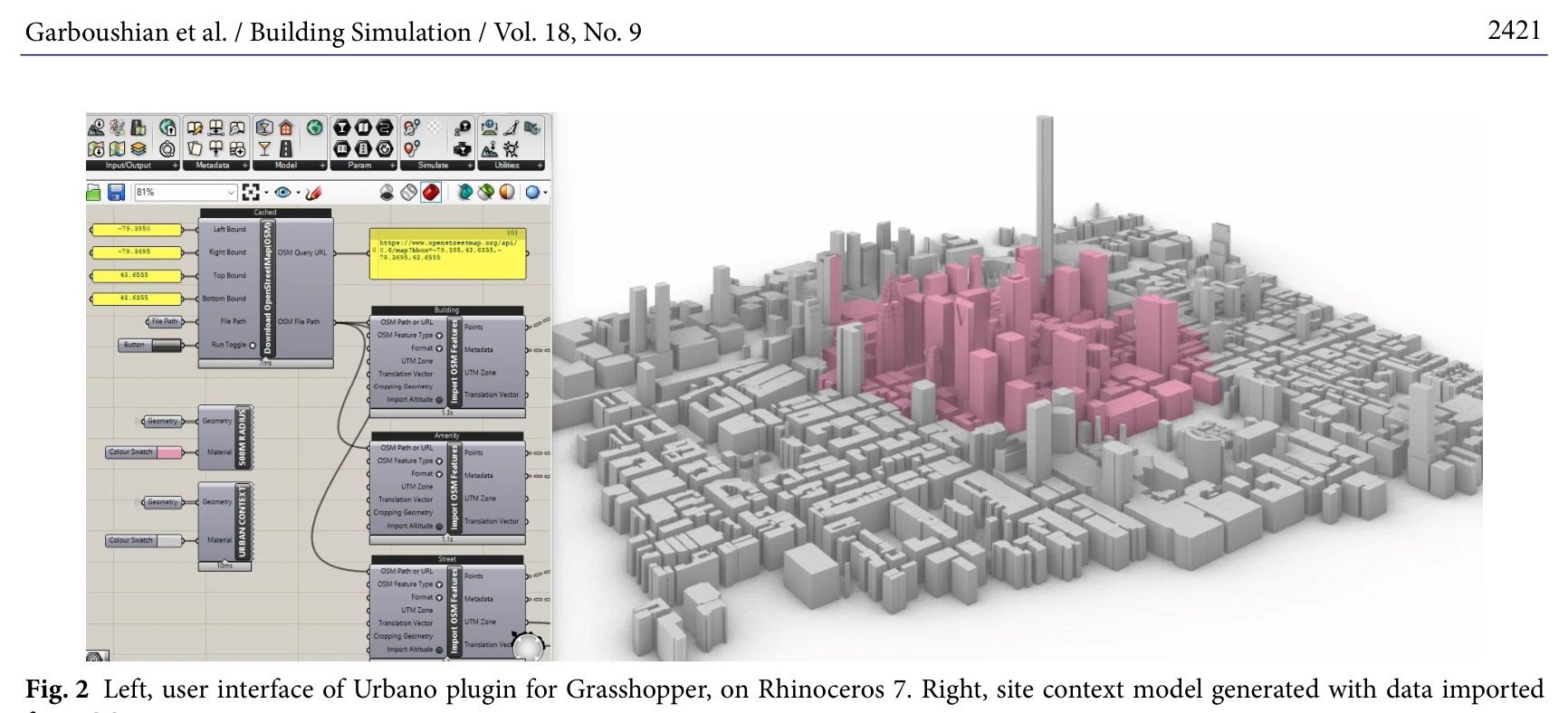
| Garboushian et al. (2025) | The energy and daylight consequences of adaptive-reuse expansion strategies are not well understood across real urban buildings. | A neural-network simulation framework uses multi-building data and variables including floor count, renewable generation, glazing, and expansion direction. | Validation against actual building use yields a 7.88% average error; east-west expansion produces 41% greater energy-demand reduction than southward expansion in the reported study. |
The paper shows how urban morphology and wind-aware microclimate prediction can improve building-energy inputs.
The study connects generative AI, energy prediction, and evolutionary optimization for energy-aware design.
The paper supports adaptive-reuse decisions with real-building validation and sensitivity analysis.