Research theme

Building Energy Prediction and Optimization

These papers address two complementary levels of prediction-oriented decision support. Shen et al. combine ensemble forecasting, explainability, and multi-objective optimization for early-stage design, whereas Tan et al. use specialized experts to model heterogeneous operational energy patterns. Together they show a shift from single-model accuracy toward interpretable and task-adaptive prediction systems.

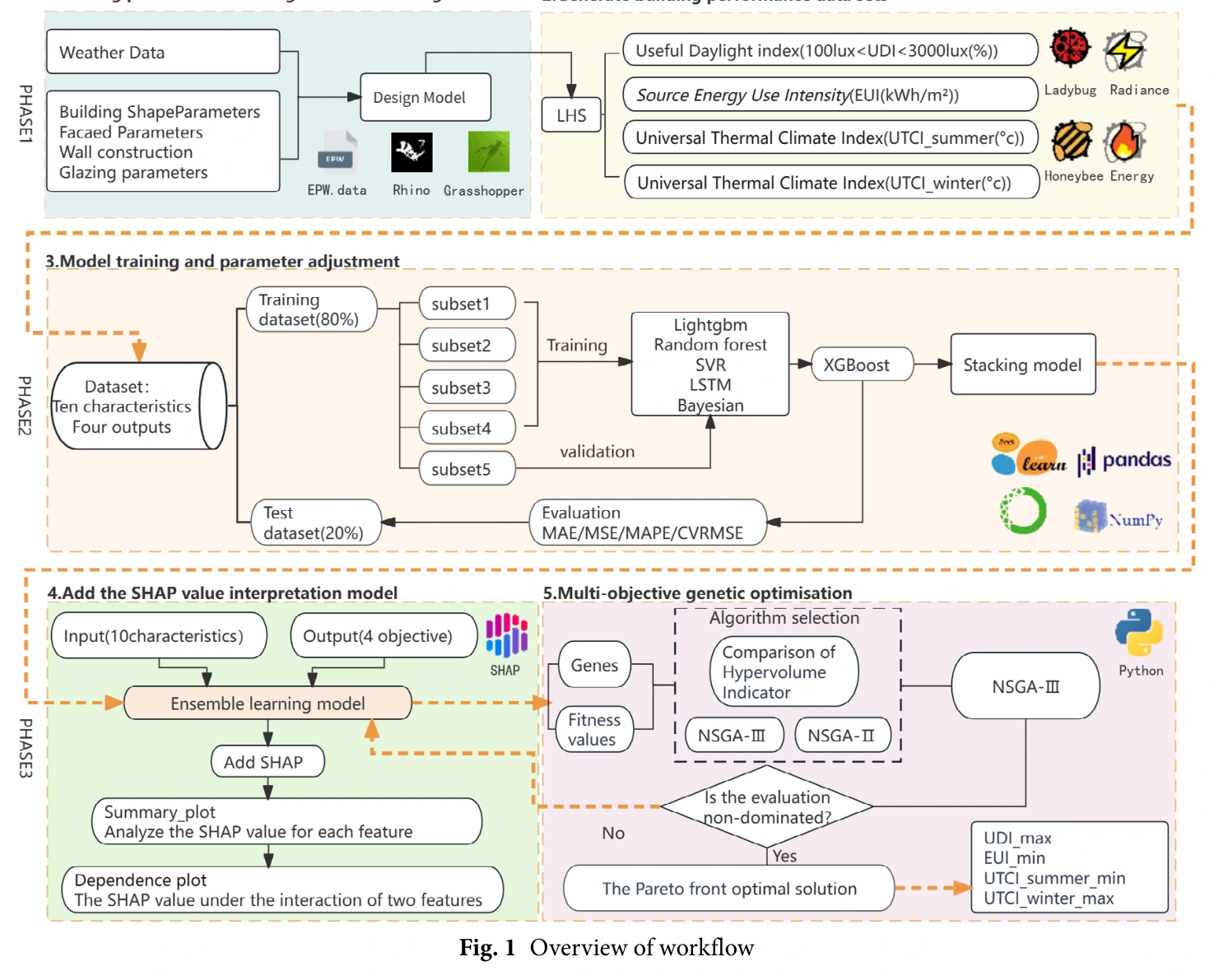
Workflow integrating building parametric modeling, stacking ensemble learning, SHAP interpretation, and NSGA-III optimization.
Figure 1. Overview of the study workflow integrating parametric modeling, stacking prediction, SHAP interpretation, and NSGA-III optimization.
Figure excerpt from Shen et al. (2024), Building Simulation. DOI 10.1007/s12273-024-1108-7
Source-attributed paper figure
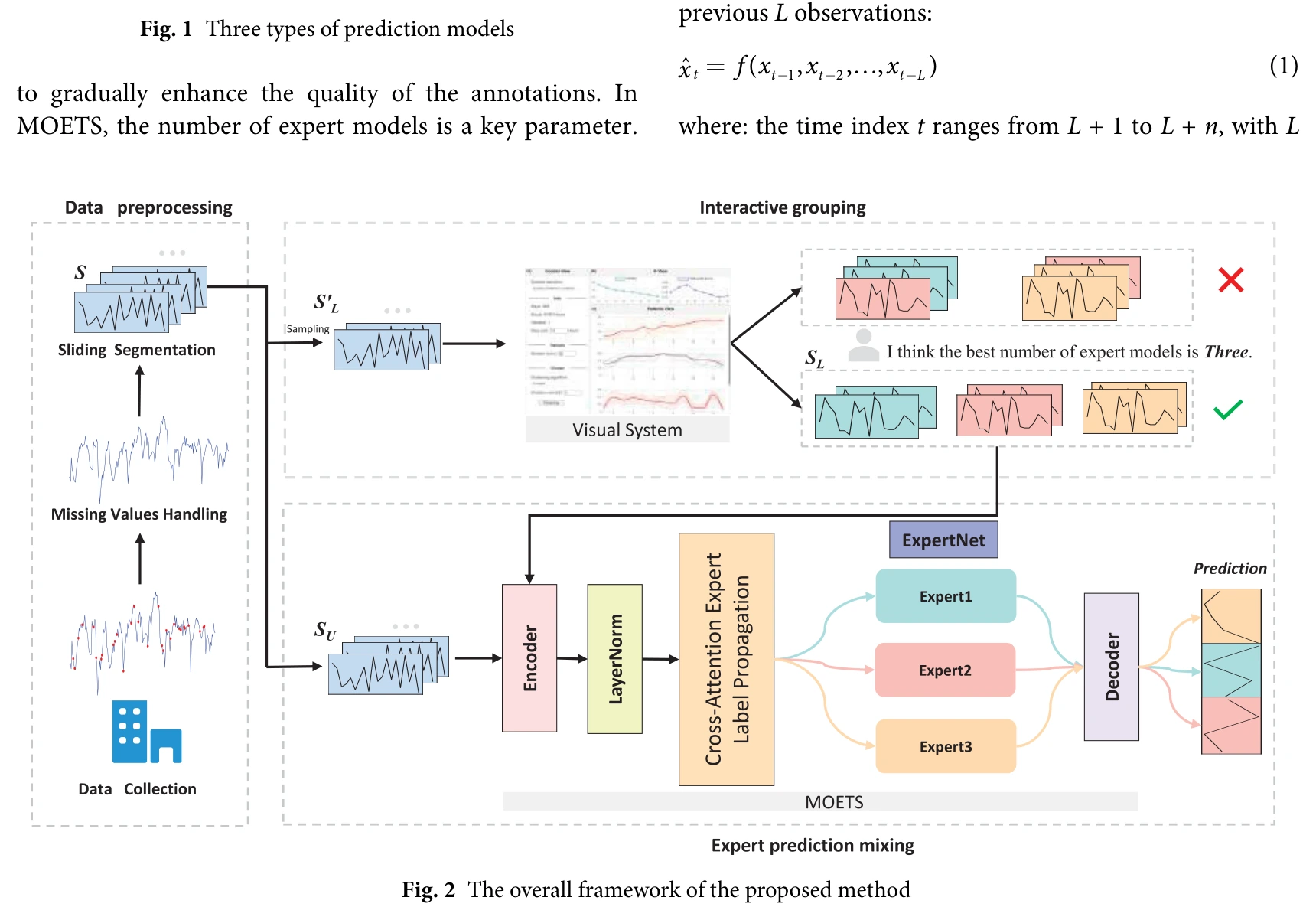
Collaborative mixture-of-experts framework for building energy time-series prediction.
Figure 2. Overall MOETS framework with data preprocessing, interactive expert grouping, expert selection, and prediction mixing.
Figure excerpt from Tan et al. (2025), Building Simulation. DOI 10.1007/s12273-025-1334-7
Source-attributed paper figure

Questions addressed

  • Which AI models are used for building energy consumption prediction?
  • How can prediction be linked to design optimization?
  • When are ensemble and mixture-of-experts approaches useful?
Source figures

Methods and applications represented in this theme

Comparison of selected papers

PaperResearch problemMethodReported evidence
Shen et al. (2024)Early-stage building design requires simultaneous prediction and optimization of energy use, daylight availability, and thermal comfort.A stacking ensemble with five base learners and a meta-model is combined with SHAP interpretation and NSGA-III multi-objective optimization.The reported results include a 9.19% improvement in R², substantial reductions in four error metrics, a 31.6 kWh/m² reduction in energy use intensity, a 39% increase in useful daylight index, and improved seasonal thermal-comfort indicators.
Tan et al. (2025)A single global forecasting model may overlook heterogeneous local patterns in complex building-energy time series.MOETS uses cross-attention expert-label propagation to select specialized experts according to series characteristics, supported by a visual tool for expert-number selection and domain annotation.Across seven datasets, the reported maximum improvements are 8.1% lower RMSE, 6.2% lower MAE, and 29.8% faster prediction.

Paper pages